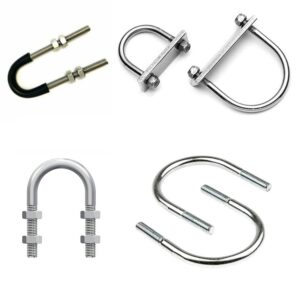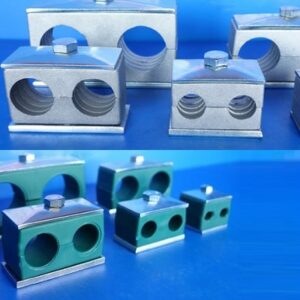
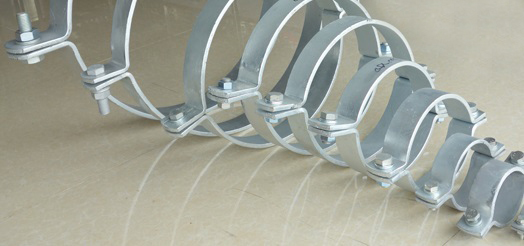
A hot-dip galvanized DIN 3567 pipe clamp is a heavy-duty two-piece flat-steel bracket used to surround and secure circular piping where a robust, OD-specific clamp is preferred to a U-bolt. SINO-ALLOY supplies carbon-steel clamps in standard-based or drawing-defined configurations for industrial plants, pipe racks, marine installations and outdoor support assemblies. The two matching half-shells are joined by side bolts, while band width, thickness, bolt size, clearance and structural attachment are selected for the actual pipe outside diameter and design duty. Hot-dip galvanizing can be specified for fabricated steel components, with final coating, hardware and inspection requirements confirmed against the project specification.
Product at a Glance
| Selection Item | Reference Configuration | Qualification |
|---|---|---|
| Product type | Heavy-duty two-piece flat-bar pipe clamp | Two matching semicircular halves with bolted side lugs |
| Dimensional basis | DIN 3567:1963-08 or customer drawing | DIN 3567 is published for pipe brackets from NW 20 to NW 500; actual pipe OD remains the controlling fit dimension |
| Common base material | Carbon structural steel, including S235JR where specified | Grade and delivery condition must be stated on the purchase specification |
| Surface protection | Batch hot-dip galvanized after fabrication | ISO 1461 or ASTM A123/A123M may be specified for fabricated steel; hardware may require a separate applicable coating standard |
| Bolting | Hex bolts, nuts and washers at both side joints | Diameter, grade, thread, coating and tightening method depend on clamp size and duty |
| Pipe interface | Unlined steel band as the basic configuration | Clearance, protective pad or lining can be added where the pipe surface or project design requires it |
| Function | OD-specific pipe restraint within a designed support assembly | Grip, guide, anchor and non-grip behavior must be defined by fit, attachment, bolt preload and the complete support detail |
| Load rating | Project-specific | No universal load is assigned without pipe reactions, geometry, material, temperature, support spacing and connection details |
| Customization | Band width and thickness, inside diameter, lug geometry, bolt size, finish and attachment details | Available subject to drawing and technical review |
Customization Note: The dimensions and technical values above are for selection and quotation reference. Actual dimensions vary with the applicable standard, actual pipe outside diameter, grip or non-grip design, insulation or lining thickness, installation arrangement, pipe reactions and project requirements. SINO-ALLOY can manufacture heavy-duty pipe clamps according to customer drawings, specifications, samples or confirmed installation conditions. Buyers may specify material grade, band width and thickness, inside diameter, bolt size and thread, lug geometry, coating, lining, attachment detail and inspection requirements, subject to technical review.
What Is a DIN 3567 Pipe Clamp?
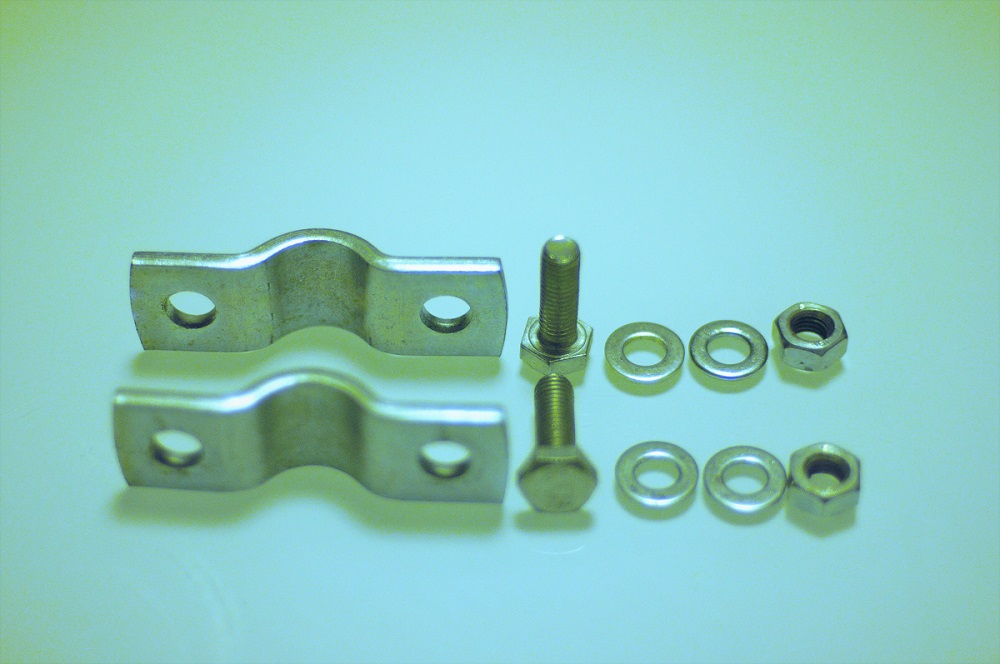
DIN 3567 describes pipe brackets for a defined nominal-size range. In the common Form A style, two shaped half-shells form a circular clamp around the pipe and are connected at the side lugs. This is materially different from a bent round-bar U-bolt: the flat band presents a wider bearing surface, and the joint geometry can be proportioned for larger pipe diameters and heavier structural arrangements.
The standard designation does not remove the need to identify the pipe correctly. DN or NW is a nominal designation, not a direct measurement of the pipe surface. A buyer should provide the actual outside diameter, including any coating, sleeve, insulation, wear pad or corrosion barrier that lies inside the clamp. SINO-ALLOY uses that interface dimension together with the selected fit and bolt arrangement to review the final drawing.
How the Two-Piece Clamp Works
The upper and lower semicircular bands distribute contact around the pipe. Bolts through the opposed side lugs bring the halves together and maintain the specified assembly condition. The resulting behavior depends on more than bolt torque. Band stiffness, inside diameter, pipe tolerance, surface condition, temperature, structural connection and any lining all affect whether the assembly grips the pipe, allows controlled axial movement or acts only as part of a larger support.
A two-piece pipe clamp should not automatically be called an anchor or guide. An anchor must transfer defined axial, lateral and vertical reactions into a qualified structure. A guide requires intentional directional clearance and a support arrangement that does not unintentionally carry loads outside its design. SINO-ALLOY can manufacture the metallic clamp component, but the project engineer should define the required support function and connection detail.
DIN 3567 Clamp Versus a U-Bolt Pipe Clamp
| Selection Factor | Two-Piece Flat-Bar Clamp | U-Bolt Pipe Clamp |
|---|---|---|
| Primary geometry | Two formed semicircular flat-steel halves | One bent round bar with two threaded legs |
| Contact footprint | Wider band contact around the pipe | Narrower round-bar contact unless a sleeve, plate or saddle is added |
| Assembly access | Halves can be positioned from opposite sides of installed pipe | Requires clearance to place the U-shaped body around the pipe |
| Typical selection driver | OD-specific heavy-duty bracket, broad contact and drawing-defined attachment | Compact, economical fastening to a plate, beam or support member |
| Critical quotation data | Actual OD, band section, lug and bolt geometry, fit and structural connection | Actual OD, rod diameter, inside width, leg length, thread and mounting plate |
For a bent round-bar alternative, see SINO-ALLOY’s hot-dip galvanized U-bolt pipe clamps. The two products should not be treated as interchangeable until pipe reactions, contact pressure, access and connection geometry have been checked.
Material and Hot-Dip Galvanizing Options
Carbon structural steel is commonly selected because the bands and lugs can be cut, formed and drilled to suit the required diameter. S235JR is an available project-specified option for standard-based European designs; other carbon-steel or stainless-steel grades can be reviewed against the drawing and service environment. Material substitution should not be made from strength alone, because forming, welding, temperature, corrosion and coating compatibility also matter.
For fabricated carbon-steel clamps, batch hot-dip galvanizing provides a zinc coating after the parts have been formed and prepared. ISO 1461:2022 specifies general coating properties and test methods for batch hot-dip galvanized fabricated iron and steel articles. ASTM A123/A123M-24 is a common alternative basis for fabricated steel products. Neither standard should be extended blindly to every bolt or nut: small hardware and threaded fasteners may fall under another specified galvanizing standard.
Band edges, holes, mating faces and threads require practical allowance for the zinc layer. The clamp drawing should identify whether the components are galvanized before final assembly, how threaded fit is maintained, whether repaired areas are permitted and how coating thickness or appearance will be inspected. A nominal coating name alone is not a corrosion-life guarantee; service atmosphere, drainage, contaminants, handling damage and maintenance remain relevant.
How to Size a Heavy-Duty Pipe Clamp
- Confirm actual pipe OD. State the measured or standard outside diameter, not only NPS, DN or NW.
- Define the interface. Identify paint, galvanizing, insulation, sleeve, pad or liner located between pipe and clamp.
- State the required behavior. Confirm whether the assembly should grip, support, guide or allow clearance for movement.
- Provide design reactions. Vertical, lateral and axial loads, including occasional and thermal cases, are needed when structural sizing is required.
- Describe the connection. Show how the clamp connects to a beam, bracket, shoe, base or other support steel.
- Specify environment and temperature. These inputs affect material, galvanizing, optional lining and fastener selection.
If the pipe is insulated, sizing only to the bare pipe OD can crush insulation or prevent assembly. The drawing must show whether the clamp acts on the bare pipe, on a load-bearing insulation insert, around a protective saddle or outside the finished insulation system. Each arrangement has a different load path.
Manufacturing and Inspection Considerations
Useful production controls include verification of material certificates, band width and thickness, formed inside diameter, lug spacing, hole position, bolt fit and the symmetry of the paired halves. Forming should avoid local cracking or a distorted contact profile. Where welding is part of a custom attachment, the drawing should identify the weld detail and the required inspection level before galvanizing.
Final inspection can include dimensional checks with an approved gauge or sample pipe, visual examination of formed edges and holes, trial assembly with the specified hardware, coating-thickness measurement where required and confirmation that nuts run correctly on coated threads. Packaging should separate the finished surfaces and keep each matched clamp set with its specified bolts, nuts and washers.
Typical Applications
- Industrial process piping and utility pipe racks
- Outdoor pipe-support frames and plant construction
- Marine and offshore topside piping where a galvanized carbon-steel solution is accepted by the project specification
- Large-diameter water, fire-service or mechanical piping supports
- Custom clamp-and-bracket assemblies fabricated to an installation drawing
Where chloride exposure, chemical service or maintenance strategy makes galvanized carbon steel unsuitable, a stainless configuration may be considered. SINO-ALLOY also supplies 316 stainless steel pipe clamps; final grade and design still require project review.
Information Required for Quotation
| Required Input | Why It Matters |
|---|---|
| Actual pipe OD and NPS, DN or NW | Controls the formed inside diameter and prevents nominal-size mismatch |
| Applicable standard and drawing | Defines whether DIN 3567 geometry or a project-specific arrangement is required |
| Band width and thickness | Affects stiffness, contact area and lug proportions |
| Bolt diameter, grade and thread | Controls joint geometry and compatible coated hardware |
| Grip, guide, anchor or clearance requirement | Determines fit and the role of the complete support assembly |
| Pipe reactions and support spacing | Needed for structural review when a rated assembly is requested |
| Operating and installation temperature | Affects expansion, material, lining and coating decisions |
| Corrosion environment and coating standard | Defines galvanizing, optional duplex coating and inspection |
| Lining, pad, insulation or finished interface OD | Prevents incorrect clearance and damage to the pipe system |
| Quantity and inspection documents | Supports production planning, traceability and packaging |
Frequently Asked Questions
Is DN or NPS enough to order the clamp?
No. Provide the actual pipe outside diameter and identify every layer inside the clamp. Pipes with the same nominal designation can have different relevant outside dimensions or surface systems.
Can a DIN 3567 clamp be used as a pipe guide?
Only when the complete support detail defines the permitted direction and clearance. The clamp geometry alone does not establish guide behavior or a rated guide load.
Can the clamp be supplied with a lining?
Yes, a protective or insulating interface can be reviewed where specified. The lining material, thickness, temperature, compression behavior and finished inside diameter must be confirmed.
Does hot-dip galvanizing define service life?
No. A coating standard defines coating requirements and inspection, not a universal lifetime. Exposure category, zinc thickness, drainage, chemicals, damage and maintenance affect performance.
Request a Technical Quotation
Send SINO-ALLOY the actual pipe OD, nominal size, DIN 3567 requirement or project drawing, band section, bolt specification, support function, coating standard, operating environment, design reactions, quantity and inspection requirements. SINO-ALLOY can review hot-dip galvanized heavy-duty pipe clamps produced to the applicable standard or to confirmed custom dimensions, with material, hardware, surface treatment and packaging agreed before manufacture.